Before traveling to Tokyo, I already had a few associations with Japan: delicious food, beautiful temples, vast cities, and high-tech toilets. Over the past few years, Japan has become an increasingly popular travel destination in Germany and elsewhere - especially, it seemed to me, among couples in their early 30s who embark on 15-hour flights from Europe, equipped with temple stamp books in search of cultural immersion.
Friends who had already visited Japan shared their advice: “Never eat while walking. It’s considered rude,” one warned. “Stay quiet on public transport and make sure you’re not in anyone’s way. Store your luggage properly,” another added. Online etiquette guides further heightened my nervousness about potentially committing a cultural faux pas. Slightly anxious and carrying more luggage than ideal, I arrived at Tokyo Haneda Airport and headed for the subway. Thanks to Google Maps, I quickly found the best car for smooth transfers. As I queued at the neatly marked spots, I was already impressed by the sense of order - something rarely seen on the Berlin subway.
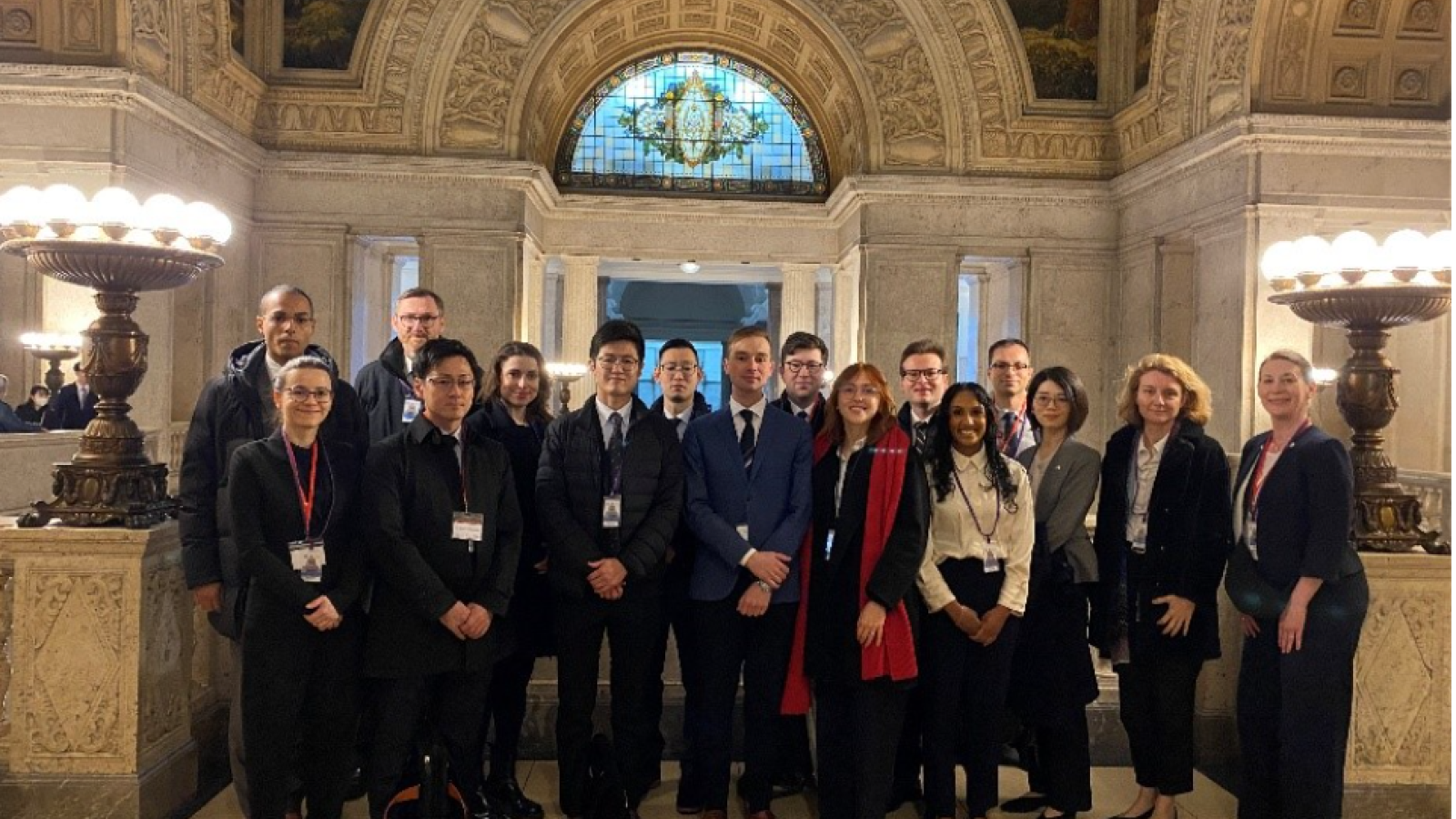
The first day of the program began with a welcome dinner at our hotel. Thanks to the self-introductions we had received in advance, we were already somewhat familiar with one another’s names and backgrounds. After warm opening remarks from our wonderful organizers, Dr. Phoebe Stella Holdgrün and Carolin Weidmann, conversations flowed easily. It was especially encouraging to learn that both the Japanese and German participants would be staying in the same hotel, fostering a strong sense of community from the very beginning.
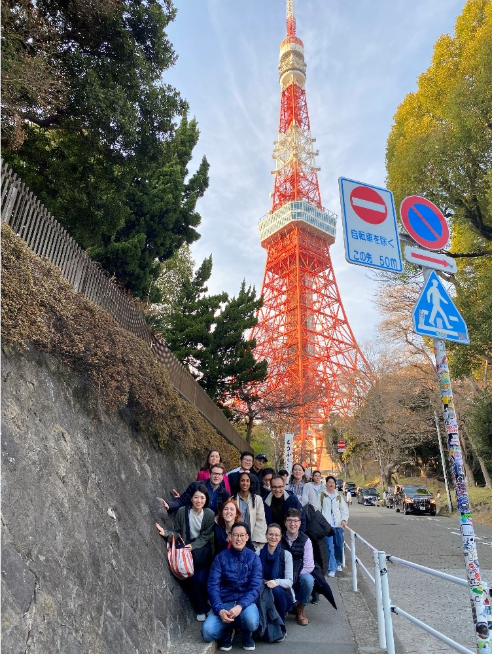
Over the following days, we followed a highly diverse and enriching schedule (which could be demanding at times) and spent a great deal of time together, even beyond the official program. In the evenings, we gathered in our small hotel rooms, sharing convenience store (konbini) ice cream and engaging in late-night conversations.
Embarking on the Young Leaders Forum
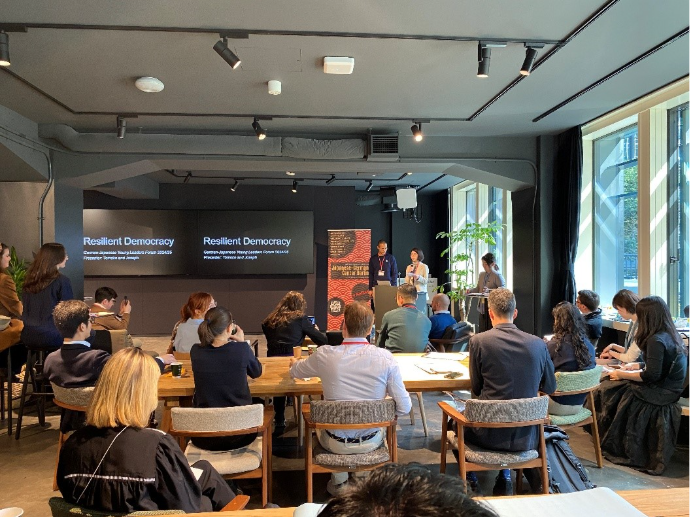
After a sightseeing day to get to know both the city and one another, we officially began the thematic part of the forum. Under the topic “Resilient Democracy - Young Leaders’ Responsibilities to Protect and Develop Liberal Democratic Societies in Turbulent Times,” we engaged in intensive discussions - made all the more relevant by unfolding global events.
The program was chaired by Prof. Dr. Axel Klein (University of Duisburg-Essen), who skillfully guided the group through a wide range of sessions with speakers from academia, politics, media, and civil society. His thoughtful moderation created an atmosphere of openness and reflection, and his encouragement to question our own assumptions sparked engaging - and often personal - conversations among participants.
In topic-based working groups, we explored democratic challenges and approaches in Germany and Japan related to climate change, AI, political socialization, mass media, and external threats. We examined the current situation in both countries, the specific risks posed by these issues, and how each country is responding. We also discussed differences in debate culture, political systems, and opportunities for citizen participation, while reflecting on the roles of political parties and the challenges of civic engagement.
Discussing Democracy
In the following days, we visited the German Cultural Center Tokyo, where, among others, the Co-Chair of the German-Japanese Forum, Prof. Dr. Daniela Schwarzer (Bertelsmann Stiftung), shared valuable insights into the current state of democracy in Japan, Germany, and beyond, as well as geopolitical tensions and global disinformation trends. Our discussions emphasized the urgent need not only to defend democracy but also to actively innovate and strengthen it.
Our visit to Japan’s National Diet included a tour of the impressive parliamentary buildings and an exchange with Minister Minoru Kiuchi, Member of the House of Representatives. At the Foreign Correspondents’ Club of Japan, we learned about the role of press clubs and engaged in eye-opening discussions on press freedom with a Japanese journalist and international correspondents.
One concept unfamiliar to our Japanese peers was the system of German political foundations. During our visit to the Tokyo office of the Konrad Adenauer Foundation and a meeting with a representative of the Friedrich Ebert Foundation, we explored their roles, funding structures, political influence, and historical development.
At the German Institute of Japanese Studies, we examined demographic change and climate change mitigation in democratic contexts. It was particularly surprising to learn that younger generations in Japan are often less concerned about climate change than older ones-and less willing to make lifestyle changes. This led us to reflect on the importance of self-efficacy - the belief that one’s actions can make a difference.
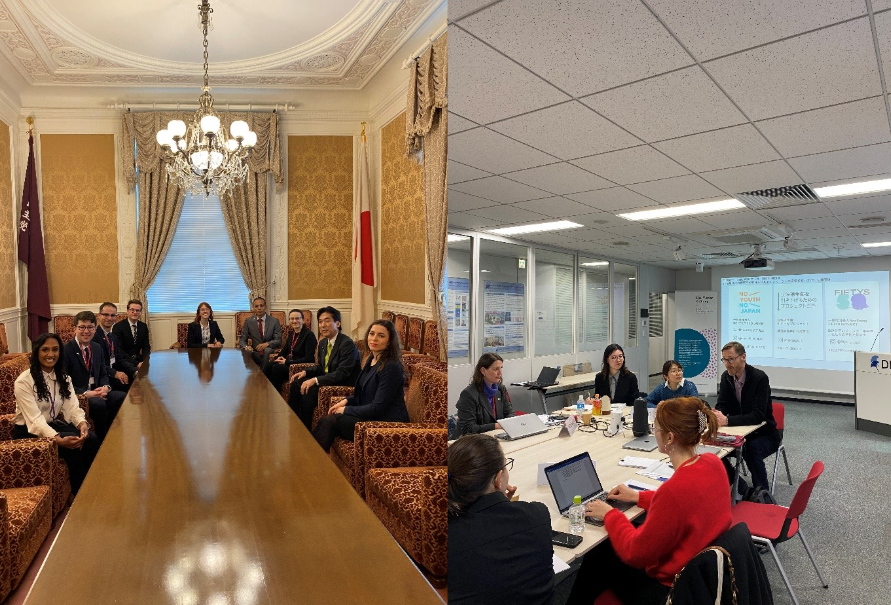
We were especially inspired by Momoko Nojo, a young activist and founder of No Youth No Japan, who advocates for greater youth engagement and female political participation. Learning that youth voter turnout in Japan is around 30%, compared to over 70% among those aged 60+, and that only around 15% of members of the House of Representatives are women, underscored the importance of her work.
We also met representatives from the Japan Youth Council, who advocate for stronger youth participation in policymaking. Their insights further deepened our understanding of both the opportunities and structural barriers for young people to become politically active in Japan. Other sessions focused on AI and democracy, as well as the impact of the climate crisis on democratic stability and peace.
Bringing Our Findings Together
Amid these complex and often sobering discussions, one recurring theme emerged: How can we prevent people from being misled by fake news? How can we encourage responsible use of AI? How can we motivate more people to support climate action-even when it affects their own comfort? And how can young people be inspired to engage actively in politics?
The answer to all these questions seemed to converge on one key factor: education - particularly media literacy. In our working groups, we developed ideas for how media literacy could be integrated into school curricula, including the ability to access, understand, and analyze media content, critically evaluate sources, identify misinformation, and counteract phenomena such as hate speech. We also shared best practices from both countries, such as mock elections.
The days passed quickly. We met inspiring individuals, deepened our understanding of democratic resilience, and grew together as a group. Through exchanges with our Japanese peers, we gained deeper insight into cultural norms we had previously only heard about. We learned that eating while walking is indeed considered impolite - although it would rarely be pointed out directly out of politeness.
We also came to understand why political discussions are often avoided in private or professional settings: they carry the risk of disagreement, which may disrupt group harmony or lead to social exclusion. With this in mind, we found new and constructive ways to engage in meaningful discussions within our diverse group. Despite differing perspectives, we communicated openly and identified common ground, which we summarized in a resolution:
A resilient democracy requires political education, civic engagement, and media literacy.
Democracies depend on robust and autonomous institutions.
While AI and climate change pose significant challenges, they also present opportunities.
On our final day, we were warmly welcomed to a reception at the German Embassy in Tokyo, hosted by Deputy Head of Mission Mr. Martin Huth.
The event brought together many speakers, supporters, and alumni-including participants from the very first cohort - highlighting the strength and continuity of this network.
Democracies depend on robust and autonomous institutions.
While AI and climate change pose significant challenges, they also present opportunities.
On our final day, we were warmly welcomed to a reception at the German Embassy in Tokyo, hosted by Deputy Head of Mission Mr. Martin Huth.
The event brought together many speakers, supporters, and alumni-including participants from the very first cohort - highlighting the strength and continuity of this network.
Connecting Past, Present, and Future
After completing the forum-with our jointly developed resolution as a capstone - we transitioned into the alumni conference titled “Future/Modern Society: How can design and technology help shaping a democratic society which is diverse, inclusive, equitable and identifying?” With an even larger and more diverse group, we continued exchanging ideas across generations and disciplines while strengthening our connections.
We concluded our journey with a rich cultural program. Through the practice of ikebana, we learned how to express ourselves while respecting and appreciating the perspectives of others. Although collaboration is not always easy, it can lead to unexpected - and in our case, truly beautiful - results.
After a ferry ride, we experienced a blind dinner at a temple, guided by a monk who encouraged us to embrace unfamiliar situations and explore new ways of perceiving the world.
Final Reflections
The 16th German-Japanese Young Leaders Forum was a uniquely enriching experience. It offered not only valuable insights into the resilience of democracies and the opportunity to engage with inspiring individuals, but most importantly the chance to build lasting cross-cultural friendships.
The forum deepened my understanding of how interconnected the challenges to democratic resilience truly are and strengthened my commitment to promoting democratic values, sustained dialogue, and mutual learning in both my professional and personal life.
I would like to conclude by expressing my sincere gratitude to the organizer, the Japanese-German Center Berlin, the supporters - Daido Life Insurance Company, the Mori Manufacturing Research and Technology Foundation, the Yamaoka Memorial Foundation, Yanmar Holdings Co., Ltd., and Yuasa M&B Co., Ltd. - as well as the wonderful chair, Prof. Dr. Axel Klein, distinguished speakers, alumni, and everyone involved in making this valuable experience possible. I am deeply grateful and wholeheartedly recommend this program to future generations.